The Tempo Gap: It's All About Time and Willingness
A tempo gap in music is a deliberate pause that builds inner rhythm. This is about what happens when you stop living at someone else's pace and what you find in the silence.

Anita Chen


In music, a tempo gap is a deliberate technique. A musician slows down, pauses, or shifts the beat on purpose. The silence is part of the practice. The gap is where the timing actually gets learned.
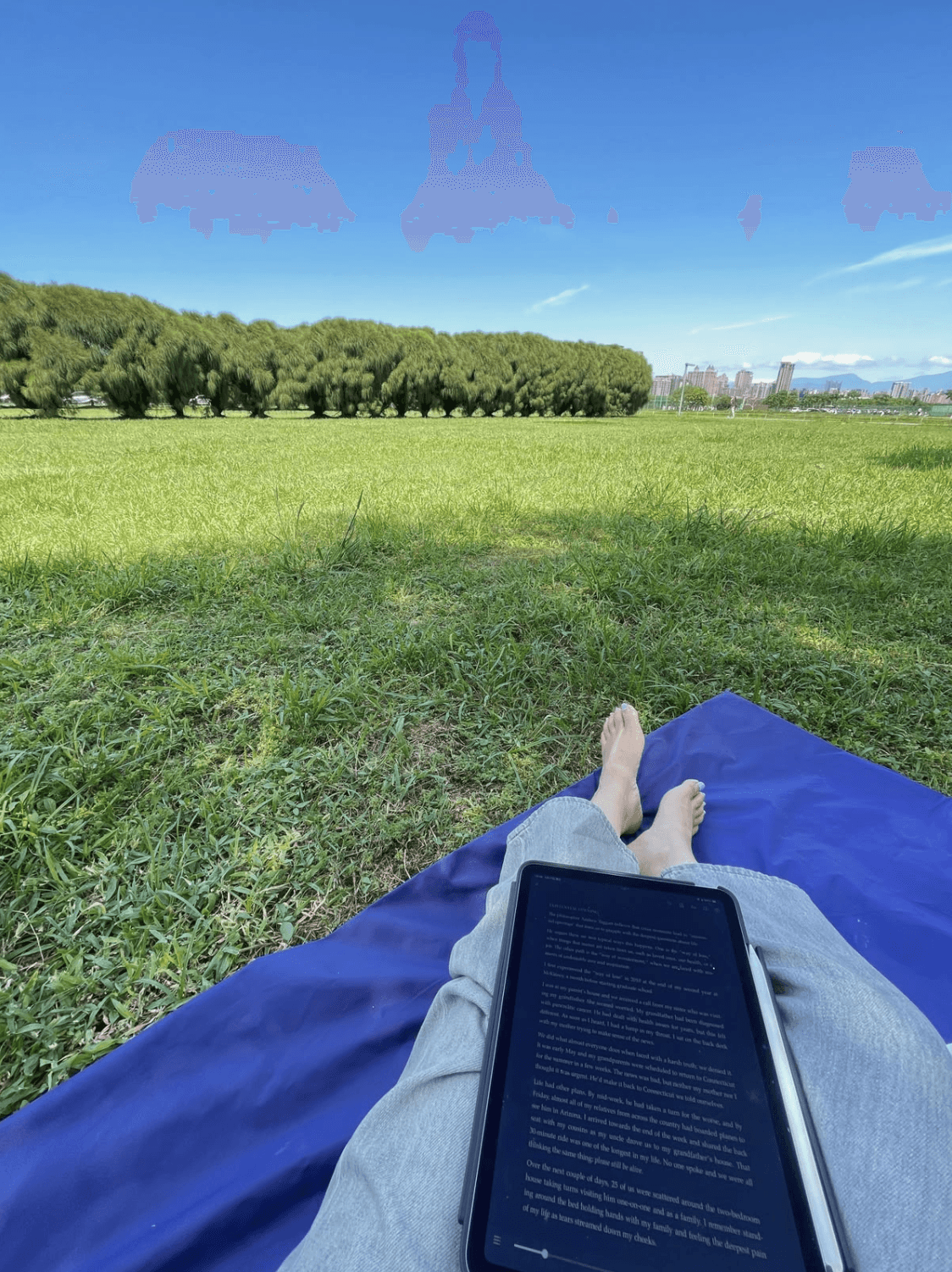
I pressed pause at the end of 2024. Intentionally. After 7 years of moving, building, and becoming, I needed to let things settle, the way sediment finds the bottom of a glass when you finally stop shaking it. I want to come back to myself with more clarity than I left with.
The Gap Year pause is what this piece is about.
I Am Weird. And I've Made Peace With That.
My mind doesn’t work the way I was told it should. My life doesn’t either.
For a long time, I tried to follow the script - the normal progression, the expected milestones, the version of success that everyone around me seemed to be navigating without much complaint. I tried, genuinely. But I could never quite make myself fit inside the frame. The commute, the performance review cycle, the version of ambition that looked correct from the outside but felt hollow from the inside. I didn’t understand why doing a job well wasn’t enough to make me feel like I was living well.
What I eventually came to understand was this: I had been playing someone else's tempo for so long that I had forgotten I had my own. And sustaining someone else’s rhythm, day after day is one of the most quietly exhausting things a person can do.
The Days That Wouldn't End
The slowest days of my life had one thing in common. I was not doing things I had chosen. I was doing things that had accumulated around me, by circumstance, by expectation, by the kind of quiet default that happens when you never stop to ask whether any of this is actually yours.
The heaviness wasn’t tiredness. I know what tiredness feels like. I have been genuinely exhausted from work I love and felt alive at the end of it. This was something different. It was the specific weight of showing up for a life that didn’t quite fit, and pretending, mostly to myself, that I did.
And Then the Years Disappeared
Here is the part that unsettled me more than the long day. I looked up one January and genuinely could not account for the previous 12 months.
Not because nothing had happened. Things had happened. But when I tried to locate myself in those months, I kept finding that I had been somewhere slightly beside the efficient and leaving no real impression on them. Present in the room, absent from the experience. Getting through the days efficiently and leaving no real impression on them.
A year of days like that becomes a kind of blur with a few dates attached.
The Tempo Gap works in both directions. When the rhythm is wrong, each day feels too long. When days aren’t truly lived, the years become too short. Both are symptoms of the same thing : being out of sync with your own pace.
What Mexico Taught Me About Rhythm
Moving to Mexico was where my self-discovery actually started, not the polished, Instagram-friendly version of self-discovery, but the kind that happens through friction.
I spent a lot of time there observing my patterns, my history, my relationships with family, friends, and people I loved. I learned at least as much through conflict as through clarity. Fights revealed things that calm conversations never would have. Mistakes became some of the most useful data I’ve ever collected about myself.
Curiosity is an entrance to how people get close to each other.
Conflict is an entrance to how relationships become strong enough to last.
Being vulnerable is the thing that makes closeness feel real.
Strolling alone one night recently, I found myself turning all of this over again in my mind just as the way a cow returns to chew what it has already swallowed. Different life stages bring different meanings to the same events. The facts don’t change, but what you are able to hear in them does.
We are always revising ourselves. That’s how growth actually works.
The Metronome I Was Following Wasn't Mine
I’m not inclined to find the perfect beat and stay there forever. The point is to develop such a strong internal sense of rhythm that you can navigate deviation, silence, acceleration, and pause, and still know where you are. You stop needing the external metronome to keep you on track. You already know.
I think about this a lot when I think about how I want to live.
The internal rhythm I was trying to build was something quieter and harder to explain than a five- year plan. More like a felt sense of whether the direction is right, even when the path isn’t visible. Something that lets me take the detour, change the plan, live in a different country for a season, and still know what I am building toward.
I like to have flexibility in life. It provides room that may surprise us with any new possibility and it has an inner tempo strong enough that I don’t lose myself when the external beat changes.
What I Actually Changed
What I changed was smaller and harder to describe than any dramatic pivot.
I started paying attention to the texture of resistance. Not all friction is meaningful, but some of it is a signal worth listening to. The tasks I had been procrastinating on for years turned out to be tasks I shouldn’t have been doing at all, because they were genuinely not mine. The work that energized me even when I was tired pointed somewhere. I started following that instead.
I’ve come to believe that if something is worth doing, there has to be a reason that is mine, not just the reason that other people find convincing. Other people’s opinions are, at the end of the day, other people’s. The real work is learning how to take in information from the outside world and actually metabolize it, make it yours, let it become part of your own experience rather than just noise you are reacting to.
I also had to get more honest about pace. Slowing down had felt like failure for so long that I had confused the feeling of rushing with the feeling of progress. It took real practice to recognize that the gap, the breath, the deliberate pause, isn’t a problem to solve. In music, that is where the rhythm lives.
A Sloth With an Armadillo Inside
I am 一隻心裡住著犰狳的樹懶. A sloth with an armadillo living inside it.
On the outside, I look relaxed, unhurried, unbothered. On the inside, I am someone who holds herself to high standards, who cannot afford to fall behind, who is deeply 卷 in the most personal sense of the word. In Chinese 卷, describes a particular kind of internal drive, the refusal to let yourself slip, the pressure to stay competitive and capable because you genuinely cannot accept less from yourself.
I know exactly where I am standing. I know which directions I want to move in . Whether that’s work, relationships, or the things I love for no reason other than that I love them, I want to move through all of it with an open heart and a steady step. Embracing the people and the landscapes I encounter along the way as the point, not as distractions instead.
A flexible life doesn’t mean a directionless one to me. In my opinion, it means having a clear enough sense of what matters that I can bend around almost anything without losing the thread. The best things that have happened to me were never on a schedule.
A purposeful career doesn’t mean a rigid one. In my opinion, it means having a thread, not a perfect map, just something to follow when the path gets unclear, something that keeps me oriented when everything else shifts.
The tempo gap in music isn’t a mistake. It’s a space that, predicted deliberately, builds something a constant best cannot : the ability to find the rhythm from the inside.
That is what I am still learning. Build the inner tempo. Trust the pause. Trust the timing. Things arrive when you create the space for them. And stop mistaking someone else’s metronome for your own.
The Question I Ask Myself Often
Did today feel like mine?
On days the answer is yes, the texture of time changes. The days feel less like something to survive and more like something I was actually in. And the years, slowly, start to feel like they belong to me rather than passing around me.
About
Featured Posts



Explore Topics